What Is the Legal Position When the Lease Ends but the Tenant Stays?
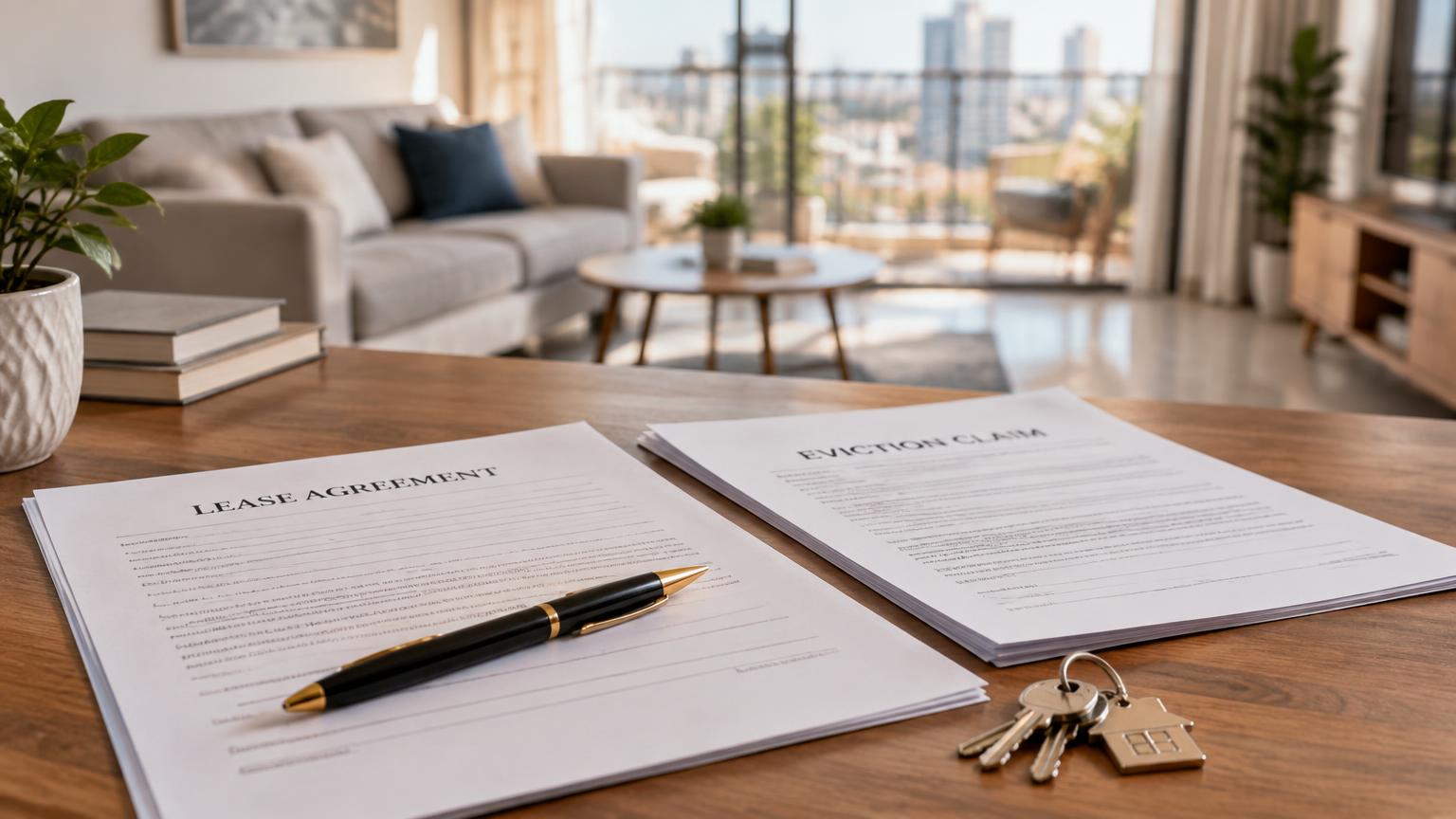
Once the lease term has ended without being extended, the tenant continues to occupy the apartment without a contractual right to do so. In practical terms, you have grounds to file an eviction claim and the right to demand payment for the period during which they occupy the property unlawfully.
Even in this situation, however, you must not use force. Changing the locks, disconnecting electricity or water, or removing belongings constitutes taking the law into your own hands and could expose you to a lawsuit. The fact that the lease has ended does not allow you to evict the tenant yourself; it allows you to apply to the court through an expedited procedure.
Before the Lease Ends: Three Steps to Prevent the Problem
Most cases of tenants refusing to leave begin with a lack of clarity. The following steps, best taken a few months before the lease ends, significantly reduce the risk:
1. Written Notice of Non-Renewal
If the lease includes an extension option, the law sets clear deadlines: a landlord who holds the option must notify the tenant at least 90 days before the lease term ends whether they intend to exercise it, and a tenant who holds the option must give notice at least 60 days in advance. Even where the lease has no extension option, early written notice that the lease will not be renewed and that the apartment must be handed back on time prevents claims of "I didn’t know" and serves as evidence if legal action becomes necessary.
2. Agree on a Handover Date
Set a date and time in advance for handing over the keys and inspecting the apartment, and confirm them in writing—even in a WhatsApp message. A specific appointment creates a commitment and helps you identify early on if a tenant is becoming evasive.
3. Document the Apartment’s Condition
Photograph the apartment and keep the handover report from the start of the tenancy. If damage is discovered at the end of the term, this documentation will be decisive in resolving the dispute. Disagreements over deposits are one of the common reasons tenants end up "stuck" in an apartment.

Enjoyed the article? Get personal advice on your property
Flamingo's AI advisor answers instantly on ownership, investment and property management questions in Israel
A Common Mistake: Accepting "Another Month’s Rent"
When a tenant asks to stay a little longer and offers to pay, many landlords agree out of goodwill. The problem is that continuing the tenancy after the term has ended, without setting a new fixed term, may be interpreted as consent to an indefinite tenancy. In that situation, ending the tenancy requires "reasonable advance notice," delaying recovery of the property even further.
If you are willing to give the tenant more time, do so in a short written agreement specifying a firm move-out date, payment for the additional period, and the consequences of failing to leave on time. If you do not agree to an extension, state in writing that any payment accepted is toward use and occupation charges and does not constitute consent to continue the tenancy.
The Tenant Hasn’t Left: What to Do, Step by Step
- Speak directly – Have a practical conversation to establish the reason. Sometimes the tenant’s move into a new apartment has been delayed by just a few days, which can be addressed with a short agreement.
- Send a formal demand letter – A letter from a lawyer stating that the tenant is occupying the apartment unlawfully, demanding that they vacate by a specific date, and making clear that they will be liable for use and occupation charges and expenses. This letter alone often prompts the tenant to leave.
- Propose a settlement – Where there is a genuine dispute, such as over repayment of the deposit, a vacating agreement with a clear move-out date can save months.
- File a claim for eviction of rented premises – If the tenant continues to refuse, file a claim in the Magistrate’s Court under the expedited procedure, in which the tenant has 30 days to file a statement of defense and a hearing is scheduled within a further 30 days. We explain the full process in our guide to evicting a non-paying tenant.
- Enforce the judgment through the Enforcement and Collection Office – If the tenant remains even after judgment, the eviction judgment is enforced through the Enforcement and Collection Office (הוצאה לפועל).
For service details: Legal Support for Property Owners
Throughout every stage: Document every contact, keep all correspondence, and do not accept payments without clarifying in writing what they are being credited toward.
Reasonable Use and Occupation Charges: How Much Can You Claim for the Delay?
A tenant who occupies an apartment after the lease ends must pay for using it. The amount claimed is known as reasonable use and occupation charges (דמי שימוש ראויים) and is generally based on the market rent for a similar property, not necessarily the rent set in the previous lease.
Many leases also include a liquidated damages clause for each day the tenant delays vacating, sometimes at a high rate such as double the rent. Such a clause can provide effective leverage, but it is important to know that the court may reduce agreed compensation that bears no reasonable relation to the foreseeable loss. The clause should therefore be drafted carefully and on a sound basis.
An important point: a claim for eviction of rented premises can seek only eviction itself. Use and occupation charges, liquidated damages, and compensation for losses must be sought in a separate monetary claim, which can be filed in parallel.
Enforcing Security When the Tenant Won’t Leave
The 2017 amendment to the Rental and Loan Law, commonly known as the "Fair Rental Law," defined when a landlord may enforce security provided by the tenant, such as a bank guarantee, security check, or deposit. Failure to vacate the apartment on time is one of the permitted grounds, subject to two important rules:
- Only up to the amount owed – You cannot call on the entire guarantee "just to be safe"; the amount must match the actual debt.
- Advance notice – You must notify the tenant in advance of your intention to enforce the security and give them an opportunity to remedy the breach.
Enforcing security without following the rules could leave the landlord facing a lawsuit, so it is advisable to do so with legal guidance.
Why Tenants Don’t Leave—and How to Handle Each Situation
- They haven’t found a new apartment: A genuine delay, usually lasting weeks · A short written agreement with a move-out date and use and occupation charges
- A dispute over the deposit: Concern that the deposit will not be returned · A joint inspection of the apartment, documentation, and a clear repayment arrangement
- Claims of defects in the apartment: An attempt to create negotiating leverage · A factual written response and a formal demand letter from a lawyer
- Deliberate refusal: Taking advantage of the time before proceedings are filed · A formal demand letter followed immediately by an eviction claim
The sooner the reason becomes clear, the faster and less expensive the solution. In cases of deliberate refusal, every week of waiting works in the tenant’s favor, so it is best to move to legal action without delay.
How Flamingo Supports Property Owners at the End of a Tenancy
At Flamingo, we give the end of a tenancy just as much attention as the beginning, because this is what determines whether your property is returned on time and in good condition. As part of our service, we provide legal support for tenant evictions, working alongside our regular legal team:
- Tracking lease end dates and sending non-renewal notices on time.
- Coordinating handover, inspecting the apartment, and documenting its condition.
- Sending legally compliant notices and negotiating with the tenant.
- Filing an eviction claim and a claim for use and occupation charges, with support through to recovery of the property.
- At the same time, finding a new, screened tenant to minimize the vacancy period.
Has the lease ended while the tenant is still in the apartment? Leave your details on our legal support page or call us, and we will work with you on a fast route to recovering your property.
The information in this article is general and does not constitute legal advice. Every case is different, and you should consult a lawyer before taking action.
Enjoyed the article? Get personal advice on your property
Flamingo's AI advisor answers instantly on ownership, investment and property management questions in Israel